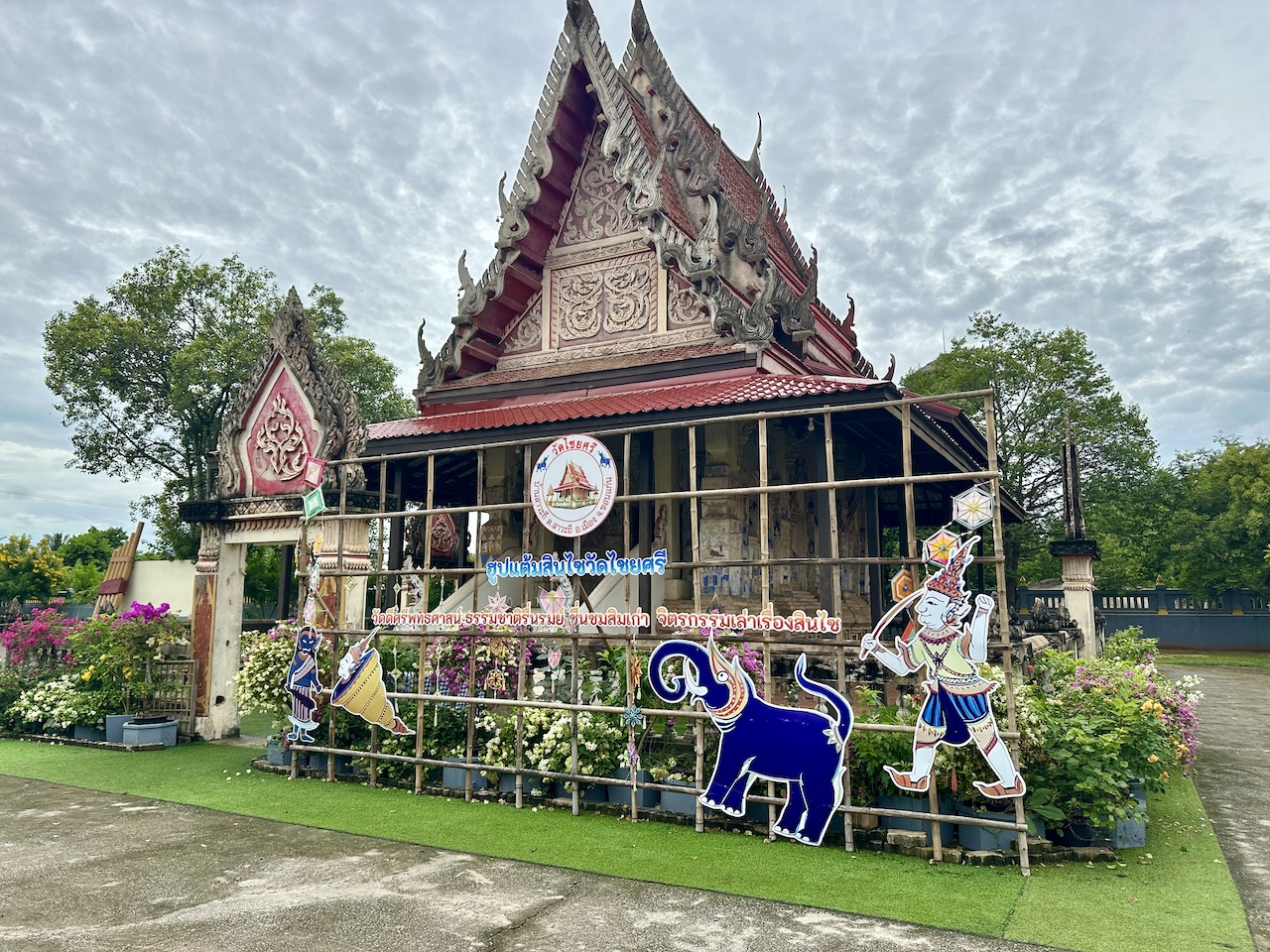
The Wat Chai Si Temple in Ban Sawathi village, located in Mueang Khon Kaen District, Thailand, stands out as an example of Isan temple architecture and mural art. The temple’s ordination hall, known as the Sim, is renowned for its unique Hup Taem wall paintings, blending Buddhist teachings, local tales, and scenes of daily life in Northeast Thailand.
Constructed around the mid-1800s, the Sim was granted a royal boundary charter in 1917 and has been officially recognised as a historical site by the Fine Arts Department of Thailand. Its design reflects the traditional Isan architectural style, featuring a modest single-room structure elevated on a base, with solid walls ideal for mural paintings.
Local Isan artists used natural pigments to create the murals both inside and outside the hall, serving as a visual narrative of Buddhist stories, the Sin Sai epic, and village life anecdotes. The artwork showcases elongated figures, dynamic compositions, and detailed storytelling, embodying the blend of Buddhist and Lao-Isan cultures.
The external murals depict scenes like the “Seven Levels of Hell,” local spirits, and protective figures, while the interior murals focus on Buddha’s life and moral teachings for the community.
Wat Chai Si poses as a conservation challenge typical of rural Thai temples. Changes made to the roof in the late 20th century caused water seepage and sun exposure, damaging the murals. Conservation efforts by the Fine Arts Department have aimed to stabilise the structure, reintroduce traditional protective elements, and prevent further deterioration of the paintings.
Today, the temple stands as an active religious site and a heritage destination, attracting researchers, conservationists, and art enthusiasts interested in Isan traditional art.
Address: Sawathi, Mueang Khon Kaen District, Khon Kaen 40000, Thailand
Unravel Travel TV, YouTube Channel: @UnravelTravelTV
Thailand posts on the Unravel Travel TV website: www.unraveltraveltv.com/thailand