Transcript from the announcement of the TOURISE 2027 Summit, taking place in Riyadh from March 23-25, 2027, as compiled by Unravel Travel TV.
September. 16, 2026 TOURISE Unveils 2027 event, Opening Remarks
Fatma, Moderator
Good evening, Riyadh. Assalamu alaikum. Welcome to everyone joining us here and virtually from around the world. We are happy to have you with us, and it’s so good to see so many familiar faces from our first TOURISE Summit. I’m happy to be here with you all again. A year ago, I stood in this very venue for the first time at the first TOURISE Summit. Nearly 10,000 leaders from around the world and more than 100 countries gathered for the summit and three extraordinary days. I mean three days filled with almost 46 announcements, 40 MoUs and a shared declaration for the next 50 years.
But what I remember most isn’t just the numbers; it’s the conversations in the hallways, the ideas shared over coffee, and the partnerships that began with a “what if.” I interviewed many leaders during the summit in those three days, and you could feel something was shifting. But why? Well, because TOURISE was not just a summit. It was not just a conference, as His Excellency likes to say, and it’s true, TOURISE is not just a conference.
TOURISE was never meant to be just three days in November; it is the beginning of something much bigger. And we will learn that in a minute. And tonight we find out just how far that beginning has taken us and where it goes next. But before we step into the future, let’s take a few steps back to where it all began.
TOURISE 2025 highlights
Highlights Reel
TOURISE is about one shared vision to paint and to design the future of tourism. We knew that the world of travel tourism needs a conference, a summit, a gathering, a venue like TOURISE. And we started to think about what we can bring to the world. What more can you add to the world of travel and tourism? Your Highnesses, Your Excellencies, industry leaders, ladies and gentlemen, welcome to Riyadh and welcome to TOURISE 2025. 10 technology trends over 10 years in 10 minutes. This future has arrived. It’s time for digitising the expected,
Humanising the unexpected.
My name is Sarah, and I am your AI moderator.
Travel and tourism are powerful engines of economic growth. We’re using tourism to really improve the quality of the city. We’re using it as a catalyst. The cities also need tourists. So, it can be a very beautiful symbiotic relationship. Tourism accelerates our economic diversification. It connects many sectors and ultimately creates layered value in the economic story.
The folks here in Riyadh send their love. Salam alalaykum. I want to be part of this amazing project, and they can count on me because I’m always by their side to make football big and help the new generations love this amazing sport. Let’s enjoy the moment, live the moment. We believe that we don’t live on this earth; we live with the earth. So when we protect the earth, the earth protects us. When we protect the seas, the seas protect us. Over the last 5 years and the next 5 years, more than $200 billion will be invested in this sector.
More than 50 tourism ministers will attend TOURISE over the three days. We’ll connect the private sector, the public sector, and NGOs to discuss challenges and opportunities in a vital sector that represents $11 trillion and 10% of global jobs. I am honoured to welcome you all to the first-ever TOURISE Awards. You understand that the magic of tourism isn’t simply about moving from place to place. That’s why the TOURISE Awards are more than mere accolades.
The real competition for creators today is ChatGPT and other LLMs. You can make the destination the hero of the content. Many brands aim to be broad for everyone, but focus on being indispensable to someone. I helped push entertainment, which then promoted tourism and promoted business to London. I don’t fear failure. That constant message of how do we disrupt ourselves before some other genius somewhere comes in closer to us is what’s important. Investment brings tourism, tourism brings investment. We work as one engine to see what reflects on the ground, whether to grow sports, to grow tourism, to grow different fields of the economy, and job creation, and so on. This is the experience economy, all about great experiences and great cultural exchanges. This is a different conference. I can’t imagine a better place to inaugurate than here.
11 showcases, 37 great speakers, three stages, 67 full sessions and 46 announcements.
$130 billion in deals. We want TOURISE to be the hub for the agreements and partnerships. And finally, TOURISE 2027 is in March 2027. Amazing numbers: over 1 billion, and having TOURISE be the hub for agreements, the hub for memoranda of understanding, and the hub for tourism, really from around the world.
Having more than 10,000 leaders in one place at one summit is an accomplishment. But you know what? There’s a lot more to say about TOURISE 2.0. So please, without further ado, put your hands together and welcome the Minister of Tourism of Saudi Arabia, Chairman of TOURISE, His Excellency Ahmed Al-Khateeb
Keynote Address
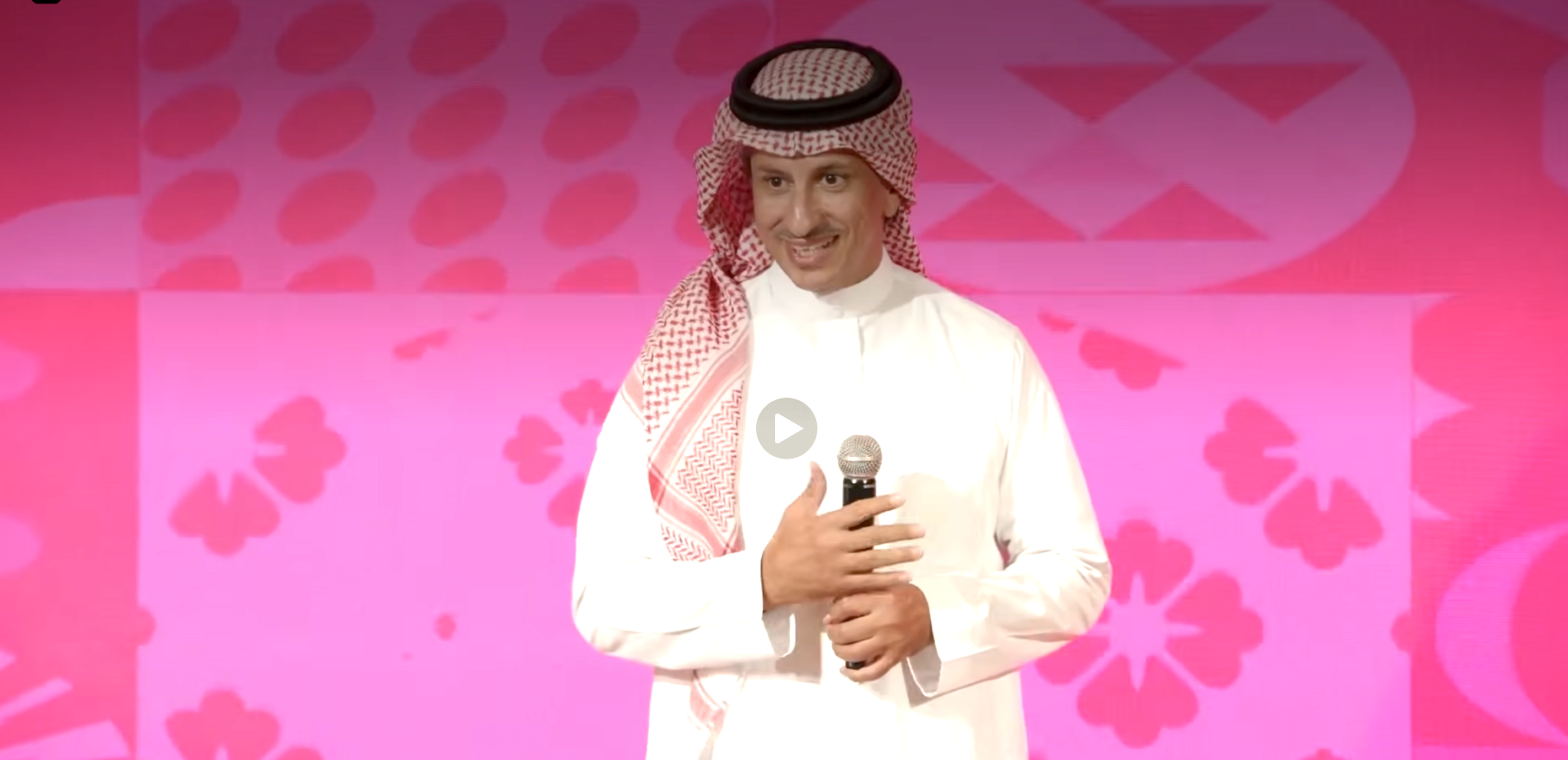
H.E. Ahmed Al-Khateeb, Minister of Tourism of Saudi Arabia, Chairman of TOURISE
Thank you, Fatma. I love the video; it’s so beautiful. You know, I’ve attended so many conferences, and I think the worst thing is attending political conferences; or, when you attend a tourism conference, you feel like you’re on vacation. I love the video. You can enjoy, you can play, you can learn, and you can eat and many other things.
But you know, the success of TOURISE 2025, or edition one, put a lot of pressure on us to continue growing TOURISE and make it bigger, and we do listen to our partners. So I call them all our partners: the investors, the people who attended TOURISE, the people who were part of TOURISE edition one. And we made sure to reflect all their comments and great suggestions in TOURISE 2027, which will take place in Riyadh in March 2027.
I also want to take this opportunity to thank Jerry for inviting us to announce TOURISE 2027 in this beautiful setting, and to thank the advisory board and welcome them to this event. What we learned in Saudi Arabia is that one party cannot work alone in silos. We have to work together. Hotel providers and investors can’t work without airlines. We need enough aircraft to carry passengers to fill these hotels, and to go and entertain and play in the theme parks, and to shop and dine; therefore, the whole travel and tourism ecosystem is well connected.
TOURISE was born to solve this challenge by ensuring that travel companies and airlines talk to airport providers, and that hospitality providers are well informed. Therefore, we made sure at TOURISE that we invite the entire ecosystem, starting from travel companies to DMCs to OTAs, airlines, airports and hotel providers, as well as all the other support businesses like Entertainment providers, food and beverage providers and definitely retail providers, to satisfy all the segments from the package traveller to the high-net-worth travellers or the luxury travellers.
Therefore, TOURISE created this kind of platform for people to meet, discuss business, sign deals, and learn about the future and the impact of technology, especially artificial intelligence. My friend said tourism is all about people, human-to-human connection. We have to understand the impact of artificial intelligence on the people who provide the service, especially since 40% of the 360 million people working in travel and tourism globally are women, 80% are young people, and most businesses, especially small and medium businesses, are in rural areas; therefore, it is very important to protect their jobs to make sure that we use the technology whenever it is necessary and we keep the human element.
We should preserve the human element when necessary. I like to deal with people; we don’t want to miss this opportunity to deal with people and learn about their culture. You get to learn about other nations’ cultures. When you interact with people, when you interact with the local, whether you’re travelling to South Africa or South Korea or any of the Pacific islands like Fiji or any of the Caribbean islands, protecting people’s jobs, training them and developing their skills is something TOURISE puts at the forefront.
We also want to ensure airline operators facing major aircraft-delivery challenges are fully aware of the industry’s growth and potential. For example, only 1.6 billion people travelled last year in a world of about 8 billion people, which is about 20%. With the emerging middle class in India and China, more than 100 million people will soon become eligible to travel.
Therefore, we want to make sure that we have enough planes and enough aircraft, enough seats to serve and to give the chance for those people to travel, and this is their right to travel, to go, see, and learn from their visits to other countries and so on. TOURISE is the platform for bringing all those people and this ecosystem together to discuss the future of the sector and make sure that everybody is working in full harmony to deliver the expected or projected two billion people. Yeah, that’s what WTTC said. They’re expecting two billion people to travel in 2030, and I think 2.5 billion by 2035.
We need a supply of planes, hotel rooms, and enough food, beverages, and other services. Therefore, we want to make sure that the future is clear. We want to ensure all service providers are well informed to deliver what they are supposed to deliver, and TOURISE will provide the solution and make the future clearer for all ecosystem providers to fulfil their mandates. Training and development are important. Challenges, future challenges, whether geopolitical challenges or technology challenges, will be discussed heavily in TOURISE to make sure again that we communicate and we understand and for us
To plan and to have a better plan for the future. Last but not least is working together, the government and the private sector. Saudi Arabia took the initiative in 2020 when we hosted the G20 in Riyadh; it was held virtually because of COVID. The private sector was invited for the first time to join the G20 ministers through WTTC to discuss how to build bridges between the private and public sectors.
We, as the public sector, regulate a sector. We oversee the sector. We ensure this sector is incentivised. We make sure the sector is competitive like any other sector. But the private sector invests the money and runs and operates it. We cannot plan for a sector. This is our understanding in TOURISE. We cannot design a sector without our partners in the private sector; therefore, TOURISE is bringing the private sector together with the public sector and other organisations, such as charities and the non-profit sector. We want organisations to come and discuss the outlook and the future of the sector and come up with the right solution for the services that will make travel easier and cost-efficient for the end user, for the tourist who wants to travel easily and who wants to have access to the final destination at the right and fair price.
I want to welcome you again and invite you to TOURISE 2027 in March, and I hope to see you all, and we are happy to answer all your questions. Thank you very much.
TOURISE 2027 film
Film narration
The world changed fast. The rules changed faster. Everything is in motion: cities, borders, economies, influence, power. Global tourism is being re-imagined and redefined. Influenced by demographics, by climate, by a new generation of movement. The future belongs to those who embrace changing expectations, new demand patterns, bold decisions, and a new era of intelligence. By 2030, 2 billion journeys will move through this new reality. No government can build it alone. No Industry can lead it alone. Partners across sectors and nations will build the next era of tourism. These are alliances that move the world. TOURISE 2027.
Panel discussion
Fatma, Moderator
That is beautiful. Your Excellency, I’m an end user, and I’m happy to hear what you just said. It’s beautiful, and I’m looking forward to learning more about it at the next TOURISE summit. Here’s what stayed with me most, though. His Excellency mentioned that TOURISE is a platform for people interested in travel to come together, discuss the future, and build that connection. Everything will be discussed, from tech challenges to geopolitical challenges to any challenges this sector might face. So n no safe conversations, but real
Conversations. That being said, we would like to point out that this edition of TOURISE is under the patronage of His Royal Highness Prince Mohammed bin Salman. So that is great news. Yes, that shows the importance and impact of TOURISE and summits like this happening here in Saudi Arabia, bringing everyone interested into one place. Of course, a platform that’s meant to serve billions of new travellers without losing what makes travel feel human again. Let’s have that sit for a moment. Make travel feel human again. So, that’s not just it. We’re going to hear more.
Please welcome back His Excellency Ahmed Al-Khateeb on stage for our panel. Joining him will be Gloria Guevara, President and CEO of the World Travel & Tourism Council, and Mario Enzesberger. CEO of Liberty International and a returning member of the TOURISE Board of Trustees.
Welcome everyone. Can we hear another round of applause for them? [applause] Thank you. All right, beautiful. So, Your Excellency, that was a great keynote. I have several questions for you, Your Excellency. So, I’m going to start with you. First, when you launched TOURISE, you said tourism needed a different kind of platform. What has changed ever since? What have we learned?
H.E. Ahmed Al-Khateeb, Minister of Tourism of Saudi Arabia, Chairman of TOURISE
Yeah. Thank you again, Fatma. We promised the world that TOURISE would be more than a summit. It is a year-round event where TOURISE have published more than five research reports over the last 12 months, and we’ll continue to do this. We held several meetings, receptions, and workshops on the sidelines of Davos and many other events. Therefore, we want TOURISE to be more than the TOURISE Summit and keep the dialogue open among all stakeholders in the ecosystem to make more informed decisions for the future.
This is a very important point for Fatma to highlight and to address topics in the whole ecosystem, which put a lot of pressure on us to design the venue. We will have a main stage where many topics will be discussed, and we’ll have tons of workshops and dialogues, and also our partners in our partners’ houses outside, in the village we call TOURISE Village; they will also host sessions and speakers, and so on.
It will be about 3 days of discussions, starting with what interests airport providers and operators, airline and carrier investors, and travel companies: hospitality, food and beverage and many Other things. The travel and tourism industry is changing for many reasons, and I can highlight geopolitics. Second is technology: where AI is heading, what kinds of jobs AI will replace, and what kinds of jobs we will protect to ensure this sector and the services provided by humans. We have to discuss this, and we have to agree, and therefore, you know, last but not least, the 20 to 30 meeting rooms that are Available for our participants, whether guests or speakers, to come and meet with their partners in the ecosystem, discuss the future and discuss business and deals. Finally, I would like to welcome, and we have communicated to investors around the world to use TOURISE as a platform to announce their future transactions and investments.
Fatma, Moderator
Amazing. Amazing. That’s wonderful. Your Excellency, now, Gloria, as the CEO and president of the WTTC, you are there; you sit with governments, and you sit with the industry. What would you say the partnerships are working in, and which aspects still need work? Thank you. Well, first of all, Your Excellency, thank you for having me and for
Gloria Guevara, President and CEO of the World Travel & Tourism Council
First of all, Your Excellency, thank you for having me and for inviting WTTC. As we know, we represent the global private sector with over 200 CEOs: 30% in America, 30% in Asia and 30%, of course, in Europe. And Jerry, as our chair, thank you, and thank you to our board for the region. For me, it’s very important. I always say that for a country to be successful, you need vision, leadership, resources, and I will add partnerships. Saudi Arabia has Vision 2030, leadership under His Royal Highness, and the team and resources to execute, but partnership, as His Excellency mentioned, is crucial. We see a big difference between countries that partner the public and private sector; they move faster. They grew last year while the global economy grew 2.8%; travel and tourism grew 4%. The Middle East grew 5%, better than the world, and Saudi Arabia was more than 7%, which was fantastic outpaced the growth globally and in the region, and kudos to all of you because that shows the execution. Now, partnership is fundamental.
His Excellency always say we regulate the private sector, create jobs, the private sector invests, and that’s absolutely right. Without the partnership, there is no success. So, what countries do we see where that partnership is working? The countries that are growing the most, such as Japan, Italy, Spain, and Saudi Arabia, are the best, growing faster than the others. And that’s when this partnership is instrumental. The private sector provides the needs; the public sector listens and implements the regulations needed to advance the growth.
Fatma, Moderator
Beautiful. That’s really exciting to hear. 7% growth despite the challenges is strong progress. Your Excellency, I’ll be with you in a second. So, hearing that and these numbers and percentages, looking to the future of tourism, what excites you the most?
H.E. Ahmed Al-Khateeb, Minister of Tourism of Saudi Arabia, Chairman of TOURISE
I’m always optimistic. I’m excited to provide opportunities and platforms for travellers who want to learn about other nations’ cultures, and we have millions of them in many countries. I’ve visited more than 120 countries in my life, and I’ve met people who never left their countries. Let’s work together to grow this 1.6 billion to four, five, or six billion and ensure people better understand others when they interact. You know, this is one: this increased number of travellers will create jobs for people who need jobs at a time when technology will definitely disrupt jobs, and we want to make sure our sector, globally, adds to the job market. And learn about other people’s cultures and other people, you know. I think this is what makes me so excited.
I want to see people travelling. I want to see jobs. I want to see people gathering together. At TOURISE 2025, we attracted more than 10,000 participants from more than 100 countries. And this is a great success. I expect to see it in 120 or 130 countries this year, for them to gather to meet, exchange ideas, and share investment opportunities. And I think this is what makes me always think about an event like this and all my friends and colleagues, whether at the advisory board or in management.
Fatma, Moderator
Lovely. So, Your Excellency, you’re emphasising the importance of AI and technology, and this brings me to you, Mario. Technology, AI, sustainability, talent, even culture. Those are topics we always hear discussed at any tourism meeting, let’s say. What would you say about which of those topics are actually working and making progress, and which need more work?
Mario Enzesberger. CEO of Liberty International
I’ll take about 30 minutes to answer this properly. First of all, Your Excellency, thank you very much for having me again. Thanks to all the TOURISE team. I’m always fascinated to talk to you because you have such a spirit, and let me tell you a little bit. I started my company a long time ago, in 1989- 1990, when the communist system broke apart in Eastern Europe. I’m Austrian by birth, and I was close by, and I moved to Eastern Europe. I lived for 10 years between Moscow and Albania and started Liberty as a destination management company there. And this was the same vibe, and more professional, like you guys are having it, building something fantastic here.
And I was the one who said to you in the beginning, in March for November, I’m not so sure, and I was totally blown away, and I am not being flattering. I’m known to be very straight and honest about what you created with the first tour. We have educated countries with shows and presentations, but no one has addressed what we’re discussing. Now, on your point about technology, I think we got it right: we have proper booking and payment systems that work in a certain way, and AI will help us. AI is an important tool. It’s too much hype for something that isn’t implemented worldwide yet, and it’s also very regional; I live in Africa. It is a beautiful place, but it will take time for this to reach there. We in China- that’s another planet, you know. China is ahead. If Germany says we are the ones and only ones, I say, please let us go to China, and then we talk about it, but we have the right culture. I don’t think we got it right because we should offer more culture, more enrichment.
I think we talked a little bit about what you have here in terms of culture or history in Saudi Arabia; it should be offered as well, you know. It’s not only about hotels and whatnot. The biggest problem we have, and this is definitely something which you could help with, is what we always try to emphasise, but we are too small and too little for that. Visas. Visas are a nightmare.
We talk about India. Yes, we have 100 people working for us in India. It’s a fantastic country. Inbound has an image problem. Outbound, we have a problem with flights. Yeah, India is not where it should be. They are on the way, but there are no planes. Nobody gets planes because we don’t have enough planes. Visas: try to get an incentive group of 600 people from India to Europe. That’s a mission impossible. Yeah. How many CEOs of American NASDAQ companies are Indian? A lot. So that’s something we have to tackle. Secondly, also to give product lines and also to not forget countries with great potential but not so much in the limelight, like is it
Africa, like, is it South America? There’s a lot of potential in what we have, and I, as a hands-on CEO, can only say: thank you, guys, very much, for creating something which is really initiating such discussions. Quality is our personal slogan in Liberty; it’s a personal touch worldwide because I believe in quality. Everything else doesn’t make sense, and you come home from your holiday and say, “It was okay.
Fatma, Moderator
It was okay. I wish it were better.” Yes, that’s a really great point, Mario. And thank you for bringing it up because it takes me right back to His Excellency and expecting more than 1 billion travellers, Your Excellency, international travellers or international arrivals, let’s say, in the future. What does the industry need to start doing today to guarantee a smooth arrival for those 1 billion travellers?
H.E. Ahmed Al-Khateeb, Minister of Tourism of Saudi Arabia, Chairman of TOURISE
Two billion by 2030; 2.5 billion by 2035. We need to get ready. And how to get ready is to talk, to coordinate, to work together, to plan, to have a solid plan. You know, this industry is very interconnected. We cannot let any sector work in silos. For example, airlines, hospitality or airports.
In Saudi Arabia, for example, we are hosting Expo 2030 and the FIFA World Cup 2034. We need to handle the millions of arrivals to Riyadh by increasing airport capacity. Therefore, we are building King Salman International Airport with a capacity of about 120 million passengers; this is one element of the service. Without capacity, we will not be able to accommodate everyone who wants to come and enjoy the Expo, the World Cup, and so on.
Therefore, we need to create a platform. Again, TOURISE was created in close coordination with the Advisory Board, with our friends in WTTC, the World Economic Forum and UN Tourism, to bring everybody together in one place: the policy makers, the investors, the operators and let them talk about the future of this sector and make sure that the future is clear for them. They need to know what they need to do, and they have the plan and the funding to deliver what they’re supposed to do. Going back to the artificial intelligence,
I’m not against it. I love technology. You know, if you go to the Ministry of Tourism headquarters, we have the head of technology here, my Deputy for Technology. He’s amazing. You know, he’s the guy behind buying a house worth billions in Saudi Arabia and selling a house worth millions by text message. You don’t need to go to any government entity if you know a technology-savvy. I love technology, I love AI, but we need to use it when we need to use it. I don’t like waiting in the airport to pick up my luggage if AI can help me and deliver it to my hotel or home. That will be fantastic. But I don’t want a robot serving me at a restaurant or in a hotel lobby. I want to talk. I enjoy talking to the hotel servers. I enjoy being driven by a driver. Autonomous cars are coming, but we will stay with our drivers. We’ll protect jobs where we can, convey our culture to our guests, and digitise services that are unnecessary.
Fatma, Moderator
We can’t wait to see that happening in the near future. So, Gloria, I want to ask you about what you mentioned earlier: Saudi Arabia is growing so fast in the tourism sector. We know that Saudi Arabia has built its tourism sector from nothing in less than a decade. What does that tell about the partnership between the government sector and the private sector, and how effective it really is?
Gloria Guevara, President and CEO of the World Travel & Tourism Council
As I mentioned earlier, and His Excellency noted, I’m very proud because I was in WTTC before. This is my second term when His Excellency hosted the G20 and, for the first time, brought the private sector, and that was huge because he didn’t tell the entire story. Still, part of the story is that we jointly put together a plan to recover 100 million jobs lost during the pandemic. And because of his belief and partnership with the private sector, we lost around 250 million jobs.
During the pandemic, we recovered 100 million quickly, and the rest followed more slowly, thanks to the partnership and leadership. That’s one example; that’s why we gave him the Global Leadership Award in Cancun. He doesn’t brag much, but it was very important. Now let me elaborate on something, if I may, because you said before our CEOs; we just interviewed them recently. They came back with eight priorities. WTTC has identified eight priorities that would allow us to unlock growth. And to Mario’s point, the first
If you ask Tony Capuano or Mario for their number one priority, they will tell you secure, seamless travel. That’s exactly what you say. How can you have fewer visas moving in and out of the airport faster, easier, better, and more securely? We have a digital identity, and WTTC is working with governments to use biometrics. Perhaps it’s like walking and not even showing your passport at some places. And that’s when Saudi can play a very important role because of your leadership, because you’re part of the G20, because you have done that before. If we can establish that partnership, we will provide the technology. We’ll provide the solutions. But working together, I think we can accelerate the growth. And that’s just one example. Another one is AI. How do we use AI? What are the better regulations? I was in China six weeks ago and, when Mario mentioned China, I remembered that I was at a conference of mayors from around the world, 140 of 200 mayors, and they gave us these glasses that I had never seen. But I put the glasses on, and to my surprise, they translated simultaneously into nine languages through AI. Yeah.
Someone was speaking Mandarin, and when I gave my speech in English, it translated to Italian, Spanish, and Arabic. And it was like having subtitles and seeing that. As His Excellency says, there’s so much that we can benefit from the technology that AI can do, and they’re using that very quietly. But I saw that in action, and I was very impressed. They don’t say that it’s just now; how do we regulate? But this partnership that His Excellency was able to do in the G20 when they hosted, and we have been able to do since the
From the very beginning, Jerry has hosted many CEOs from around the world, and His Excellency has organised events with CEOs. This is fundamental to unlock even more.
Fatma, Moderator
I’m glad you mentioned that, Mario. This is going to be my last question for the panel, and I will conclude with this now. I know Gloria mentioned a few points, and she said there are eight, but if you had to choose one to identify the future. What would you choose, really shortly, because we ran out of time?
Mario Enzesberger. CEO of Liberty International
Human capital. Workforce. Why workforce? Because basically you can create everything with AI. That is fine, and I agree. The examples from China show what is possible. Yes, it is possible. But we need to emphasise, and we need to invest in people, because AI will not be able to provide human empathy. So, human-to-human.
Fatma, Moderator
Yes, human-to-human. So you agree with His Excellency that this relationship is essential?
Mario Enzesberger. CEO of Liberty International
And this is also the problem we have in tourism: a lot of the jobs we lost, we didn’t get back because people didn’t want to come back. They moved into other industries, so we need to make ourselves attractive, and that means making it easy. We have to cut borders. We have to stop this nonsense of immigration. No immigration. Yes, immigration. You can come, you can’t come. That’s politics. We go back.
Fatma, Moderator
Yeah. Your Excellency, you wanted to say something before we move to the media. If you have any questions, please prepare them.
Media questions
H.E. Ahmed Al-Khateeb, Minister of Tourism of Saudi Arabia, Chairman of TOURISE
Thank you. I want to re-emphasise the theme for TOURISE 2027. It encourages working together across the whole ecosystem. Before we open the floor to the media, I’d like to take this opportunity to invite global media to join us in person at TOURISE. I would also like to thank our sponsors, many others, and our top speakers. On the TOURISE website, we have announced many of the top global speakers who will join TOURISE 2027 and have already confirmed their participation. They will enrich the TOURISE experience. Thank you.
Fatma, Moderator
Thank you so much, Your Excellency. Thank you, Gloria and Mario. Now I would like to open the floor to our colleagues from the media to have any questions. Please raise your hands. State your name and the entity you come from, and to whom you’re addressing the question. I see a hand raised there. Miss, please raise your hand so they can see you. There you go.
Audience member
[Audience member introduces herself
Audience question partly in Arabic
Fatma, Moderator
Thank you, Your Excellency. We want to give our colleagues joining us virtually, including our media colleagues online, a chance. I’m waiting for questions to come in. I think there’s one for Your Excellency. The question says, “Your Excellency, from our virtual media, you call TOURISE a platform, not an event.” For someone in the industry who’s sceptical of yet another summit, what’s the main difference in TOURISE?
H.E. Ahmed Al-Khateeb, Minister of Tourism of Saudi Arabia, Chairman of TOURISE
Yeah, it is a single event, but we call it a platform because it is a year-round event. I can give examples of the communication between TOURISE and the target audiences and stakeholders. Last year, since TOURISE 2025, we had more than 20 meetings, more than 10 events, and more than 10 research reports published by TOURISE; therefore, we are making sure that TOURISE keeps stakeholders and participants across the ecosystem well informed throughout the year.
We don’t want TOURISE to disappear and just be there once a year, and that is why we call it a platform,
Fatma.
Closing remarks
Fatma, Moderator
Wonderful. That’s a clear answer. Please. What is the other question? That was it. That was the only question. Thank you. I’m afraid we ran out of time. I believe so. Yes. No more questions. All right. Although we do have plenty of questions from our colleagues in the media. Let’s catch up afterwards, but we do have a time we need to follow. And then we have a group photo. So, please remain seated. We also thank our virtual colleagues in the media joining us from around the world. We thank you, Your Excellency, Gloria,
Mario, thank you so much. And to our colleagues here from the media. We didn’t get to all the questions, but we’ll continue this conversation afterwards. Thank you again.
WATCH THE VIDEO