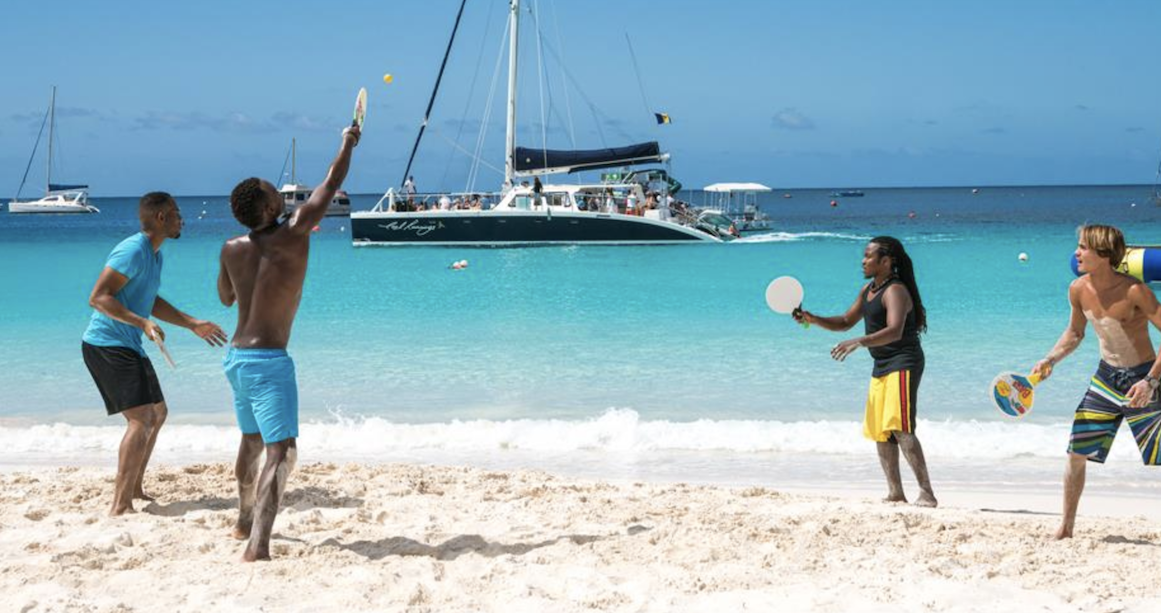
Barbados may cover only around 432 square kilometres, but the eastern Caribbean island has made an international impact far beyond its size. Visitors know Barbados for its beaches, clear waters and warm climate. However, the island also offers a rich cultural heritage, distinctive architecture, historic institutions, celebrated cuisine and traditions found nowhere else. Its capital forms part of Historic Bridgetown and its Garrison, which UNESCO added to the World Heritage List in 2011. Beyond Bridgetown, visitors can explore rum distilleries, traditional communities, natural attractions and venues preserving the island’s sporting and culinary culture.
Here are ten facts that help explain what makes Barbados unique.
1. Barbados became a republic in 2021
Barbados became a parliamentary republic on November 30, 2021, exactly 55 years after gaining independence from Britain. The transition replaced the British monarch as the country’s head of state. However, Barbados remained a member of the Commonwealth. Dame Sandra Mason, who had served as Governor-General, became the country’s first president during an official ceremony in Bridgetown.
2. Rihanna is a National Hero of Barbados
Barbadian singer, entrepreneur and philanthropist Robyn Rihanna Fenty received the country’s highest national honour during the republic celebrations in 2021. She became the 11th person to be declared a National Hero of Barbados and received the title The Right Excellent Robyn Rihanna Fenty. Rihanna was born in Saint Michael and grew up in Bridgetown. In 2017, the government renamed Westbury New Road, where she spent her childhood, Rihanna Drive. Her former family home remains one of the street’s most photographed landmarks.
3. Barbados has a powerful claim as the birthplace of rum
Barbados played a central role in the early development of Caribbean rum, linking the spirit’s history to the island’s sugar industry. Records trace Mount Gay Rum to 1703. Located in the northern parish of Saint Lucy, Mount Gay describes itself as the world’s oldest continuously operating commercial rum distillery. Early versions of Caribbean rum sometimes carried the colourful nickname “kill-devil”. Production methods became more refined over time, helping Barbados build an international reputation for blended and aged rum. Visitors can explore this heritage through distillery experiences and tastings at Mount Gay, Foursquare Rum Distillery and St Nicholas Abbey.
4. Grapefruit originated in Barbados
Botanical research identifies Barbados as the birthplace of the grapefruit. The fruit developed as a natural hybrid between the sweet orange and the pomelo, two citrus varieties introduced to the Caribbean from Asia. The Reverend Griffith Hughes documented a fruit known as the “forbidden fruit” in his 1750 book, The Natural History of Barbados. Botanists later classified grapefruit under the name Citrus paradisi. Modern research continues to support the fruit’s Barbadian origin, making grapefruit one of the island’s most influential contributions to global agriculture. More information is available in this research paper on grapefruit history and breeding.
5. The Barbados Blackbelly is a distinctive island sheep breed
The Barbados Blackbelly is a breed of hair sheep that evolved on the island. Unlike many European breeds, it grows a short hair coat instead of thick wool. Its colouring typically ranges from tan to reddish brown, with black markings along the belly, legs and face. The breed developed from sheep with African ancestry and animals introduced from Europe during the colonial period. Blackbelly sheep are hardy and well adapted to hot, semi-arid tropical conditions. The United Nations Food and Agriculture Organization notes that the breed has lived in Barbados for at least three centuries. Their appearance and short coats sometimes cause visitors to mistake them for goats.
6. Flying fish and cou-cou is the national dish
Barbados was traditionally known as the “Land of the Flying Fish” because of the species’ close association with the island. Flying fish do not fly in the same way as birds. Instead, they propel themselves from the water and use their enlarged, wing-like fins to glide above the surface. The fish forms one half of the national dish, flying fish and cou-cou. Cooks usually prepare cou-cou with cornmeal and okra, stirring the mixture until it develops a smooth, firm consistency. The dish reflects both the island’s maritime traditions and the influence of West African cuisine. The flying fish also appears on the Barbadian one-dollar coin. The Central Bank of Barbados describes the coin’s reverse as featuring a flying fish in flight.
7. Chattel houses could be dismantled and moved
The traditional chattel house is one of the most recognisable features of Barbadian architecture. These compact wooden homes developed during the plantation era. Workers often owned their houses but rented or occupied land controlled by plantation owners. As a result, families designed the buildings so they could dismantle and relocate them if necessary. The term “chattel” referred to movable property. Many houses feature steeply pitched roofs, decorative wooden fretwork, small windows and brightly painted exteriors. Owners could also expand them by adding new sections as their families or finances grew. Although modern construction has replaced many original examples, chattel houses remain an important part of the island’s architectural and social history.
8. Road tennis was created in Barbados
Road tennis is one of Barbados’ most distinctive sporting traditions. According to Visit Barbados, Lance Bynoe, often described as the father of the sport, began developing the game in 1930. It emerged as an accessible alternative to lawn tennis at a time when many Barbadians could not use private tennis clubs. Players compete on a small court marked on a road or another flat surface. They use solid wooden paddles and a tennis ball with its outer covering removed. A low wooden barrier replaces the conventional tennis net. The game remains popular in local communities and has developed organised competitions both in Barbados and overseas.
9. Barbados has one of the oldest legislatures in the Americas
The Barbados House of Assembly dates to June 26, 1639. Historical accounts generally describe it as the third-oldest legislature in the Western Hemisphere, after those established in Virginia and Bermuda. The original assembly consisted of 16 landowners. Voting and participation remained restricted by property and income qualifications for centuries, until reforms introduced universal adult suffrage in 1950. Today, the country has a bicameral Parliament consisting of an elected House of Assembly and an appointed Senate. The Parliament of Barbados provides a detailed account of its development. The Parliament Buildings stand within the UNESCO-listed area of Historic Bridgetown and its Garrison.
10. The island’s name may come from its bearded fig trees
The most widely accepted explanation for the name Barbados connects it to the bearded fig tree, a species with long aerial roots hanging from its branches. Portuguese navigators reportedly used the expression “os barbados”, meaning “the bearded ones” or “the bearded men”. The roots may have reminded them of hanging beards. However, historians continue to discuss other possible explanations, and the precise origin of the name has not been proved conclusively.
A small island with an international story
Barbados offers much more than a traditional Caribbean beach holiday. Its parliamentary history, UNESCO-listed capital, rum-making heritage, national cuisine, architecture and home-grown sports provide visitors with many ways to discover the island’s identity. From tasting rum at a centuries-old distillery to watching a road tennis match or walking through Historic Bridgetown, travellers can experience traditions that remain closely connected to everyday Barbadian life.
Visit Barbados website: https://www.visitbarbados.org/