Cebu, Philippines:
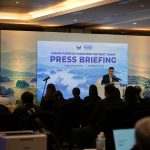
Speaking to media delegates during the ASEAN Media Briefing, Maria Margarita Montemayor Nograles, Chief Operating Officer of TPB Philippines, described the return of ATF as both a strategic opportunity and a deeply meaningful moment for the country’s tourism sector.
“We are honoured to host the ATF once again,” Nograles said, noting that the Philippines is hosting the region’s flagship tourism event at a time when tourism recovery is increasingly defined by resilience, inclusivity, and sustainability.
Marketing Arm of the Department of Tourism
Nograles highlighted TPB’s role as the marketing and promotions arm of the Philippine Department of Tourism, responsible for leading travel trade engagement, international and domestic promotions, and strategic business-to-business initiatives.
TPB currently focuses its international efforts across 13 key markets, delivering trade show participation, business missions, and partnership campaigns designed to strengthen the Philippines’ visibility and competitiveness globally.
Resilience Amid a Challenging Year
Acknowledging that the past year has been difficult for many destinations, Nograles emphasised that the Philippines continues to navigate complex realities — including climate and disruption — while maintaining its strongest asset: the resilience of its people.
She reminded delegates that the Philippines’ geography, comprising 7,641 islands, allows tourism activity to continue across multiple regions even when individual provinces face storms or other challenges.
“A storm may arrive in one province, but life continues in hundreds of other destinations,” she said.
Global Recognition Strengthens the Philippines’ Tourism Narrative
Despite the challenges, Nograles noted that the world continued to see the “heart of the Philippines” through a series of high-profile international recognitions and cultural moments.
Among the highlights referenced were:
- Global culinary recognition through the Michelin Guide
- International pop culture attention, including Conan O’Brien’s visit
- Increased heritage visibility through global artist Olivia Rodrigo
- The Philippines’ strong presence at EXPO 2025 Osaka, where the Philippine Pavilion earned international acclaim, including the Silver Plaque for Exhibition Design
Nograles said these achievements extend beyond prestige, reinforcing the country’s responsibility to protect destinations, uplift communities, and strengthen stewardship of natural and cultural assets.
Four Strategic Priorities for 2025–2028
Nograles presented TPB’s strategic direction for 2025 to 2028, anchored in a “whole-of-nation approach” that brings together government, private sector partners, and local communities.
The strategy is built around four key priorities:
1. Evidence-based marketing
TPB is strengthening data-driven tourism promotion through a comprehensive strategic plan designed to better understand traveller behaviour and communicate the Philippine tourism brand with clarity and authenticity.
2. Stronger brand reach through trusted partnerships
The organisation is expanding its work with credible local and international influencers to amplify authentic storytelling and increase global visibility.
3. Positioning the Philippines as a premium MICE destination
TPB is actively positioning the Philippines as a high-value destination for meetings, incentives, conferences, and exhibitions, supporting economic impact and international exchange.
4. Building partnerships that advance sustainable and community-based tourism
Nograles underscored TPB’s commitment to partnerships that promote sustainability, gender-responsive development, and community-driven tourism models.
ATF 2026 as a Platform for National and Regional Promotion
Nograles described ATF 2026 as a timely platform to demonstrate the Philippines’ readiness to welcome travellers and trade partners, while ensuring tourism promotion benefits multiple destinations across the country.
This is reflected in the ATF post-tour programme, where international buyers and media will visit a range of destinations including:
Pampanga, Manila, Davao, Palawan, Bohol, Dumaguete, and Siquijor.
The programme, she said, supports equitable exposure for communities beyond the traditional tourism hubs.
89 ASEAN Meetings Scheduled Across Key Destinations
Looking ahead, TPB confirmed that the Philippines will host 89 ASEAN meetings throughout the year, with sessions planned across Manila, Boracay, Palawan, and other destinations — reinforcing the country’s role as a committed and active ASEAN tourism partner.
Community-Based Tourism and Cultural Heritage Programmes Expand
Beyond regional commitments, Nograles highlighted TPB’s ongoing “business-as-usual” tourism promotion programmes, particularly those supporting community-based tourism.
She cited initiatives that empower:
- Weavers and cultural artisans
- Local storytellers
- Community enterprises rooted in heritage and identity
These efforts, she said, help protect cultural traditions while creating pathways for economic opportunity locally and internationally.
At EXPO 2025 Osaka, TPB’s advocacy for cultural heritage was showcased through what was described as the largest weaving collaboration in Philippine history, reaching more than one million visitors and generating an estimated 2.4 billion in media mileage.
Expanding Motorcycle and Cycle Tourism
Nograles also highlighted the growth of the Philippines’ motorcycle tourism programme, which has expanded routes and circuits designed to connect travellers with communities and small businesses.
In parallel, TPB is advancing cycle tourism — positioning cycling not only as a sport, but also as a low-impact and environmentally conscious way to explore the islands.
Trade Engagement Remains Central
Across all programmes, TPB continues to integrate business-to-business engagement to connect Philippine tourism enterprises with international partners.
Nograles noted continued participation in major travel trade events and business missions, supported through partnerships with airlines, tour operators, and online travel aggregators.
CSR and Sustainability: A Tourism Responsibility
With climate impacts becoming more visible across destinations, Nograles stressed that TPB’s role extends beyond promotion.
The organisation is advancing corporate social responsibility (CSR) programmes aligned with the UN Sustainable Development Goals, anchored on four pillars:
- Education
- Environmental conservation
- Heritage preservation
- Community assistance
She cited CSR initiatives in Batangas and Palawan, aimed at protecting natural assets and supporting the communities who sustain them.
Media as a Key Partner in Shaping the Narrative
In closing, Nograles emphasised the vital role of the media in translating tourism strategy into stories that inspire trust, understanding, and long-term engagement.
“Our progress is only as visible as the stories told about it,” she said.
As ATF 2026 continues in Cebu, TPB Philippines invited media to engage closely with the organisation, explore the country’s diverse destinations, and help shape a fuller and more accurate narrative of Philippine and ASEAN tourism.
On behalf of TPB, Nograles thanked delegates for their participation and welcomed them warmly to the Philippines.
“Welcome to the Philippines. Thank you.”