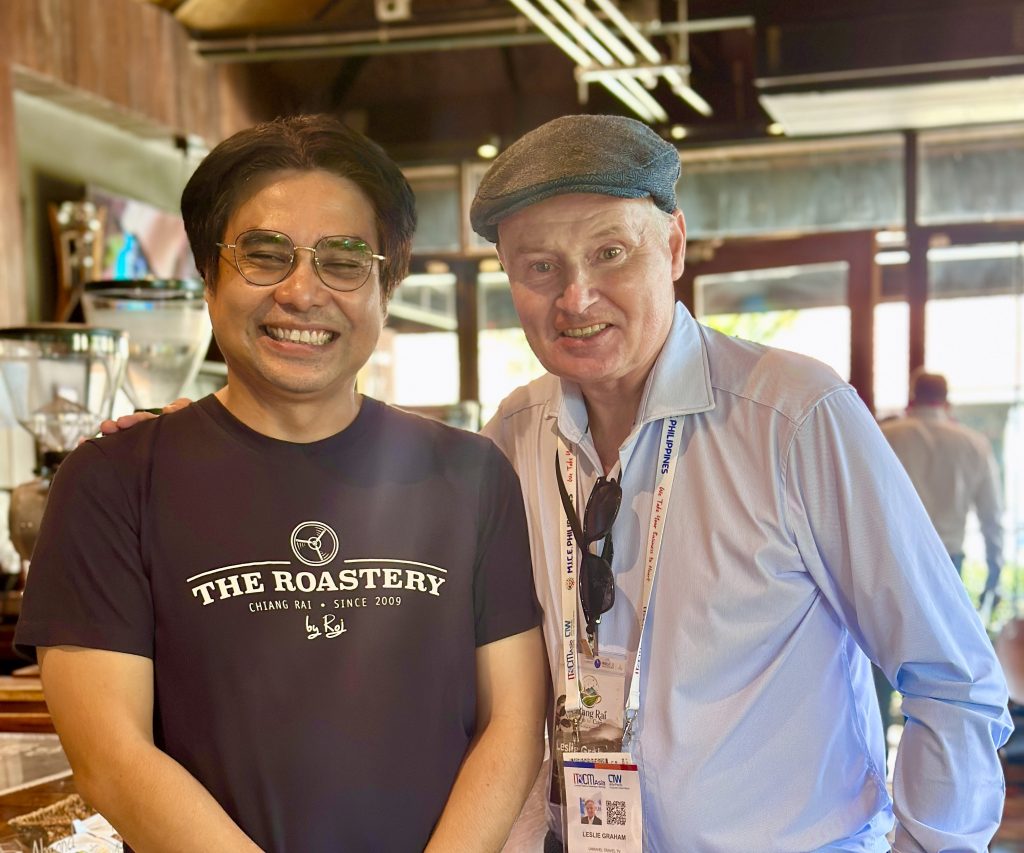

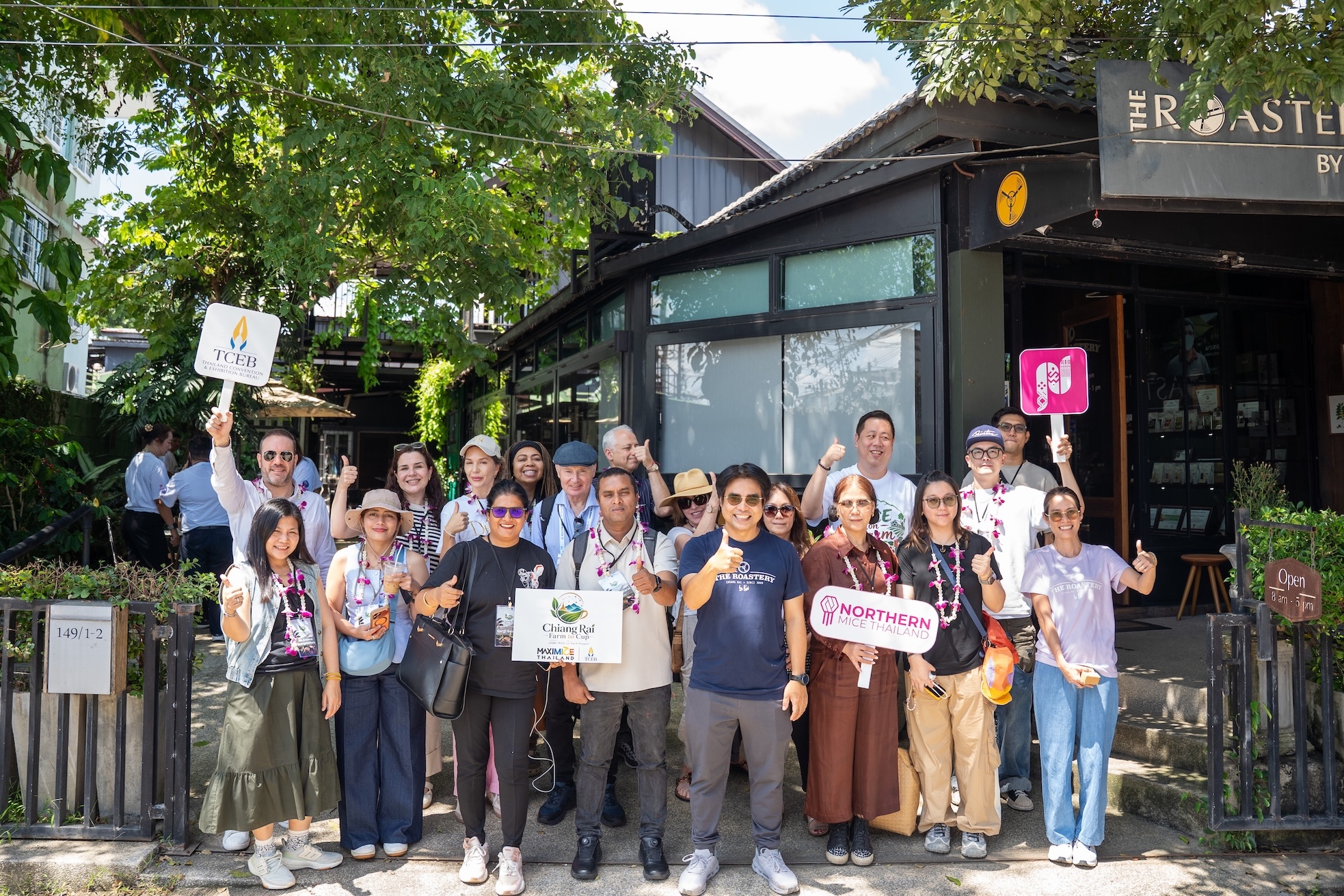
At The Roastery By Roj in Chiang Rai, founder and owner Khun Saroj sees specialty coffee as a shared effort. Farmers, processors, roasters and baristas all contribute to the quality of the final cup, and he believes the value it creates should reach the people working throughout that chain. In a presentation filmed by Unravel Travel TV, Saroj explains how his business works with local farmers to improve coffee quality. Through a tasting of three different coffees, he also encourages visitors to look beyond familiar preferences and consider the work behind what they drink.
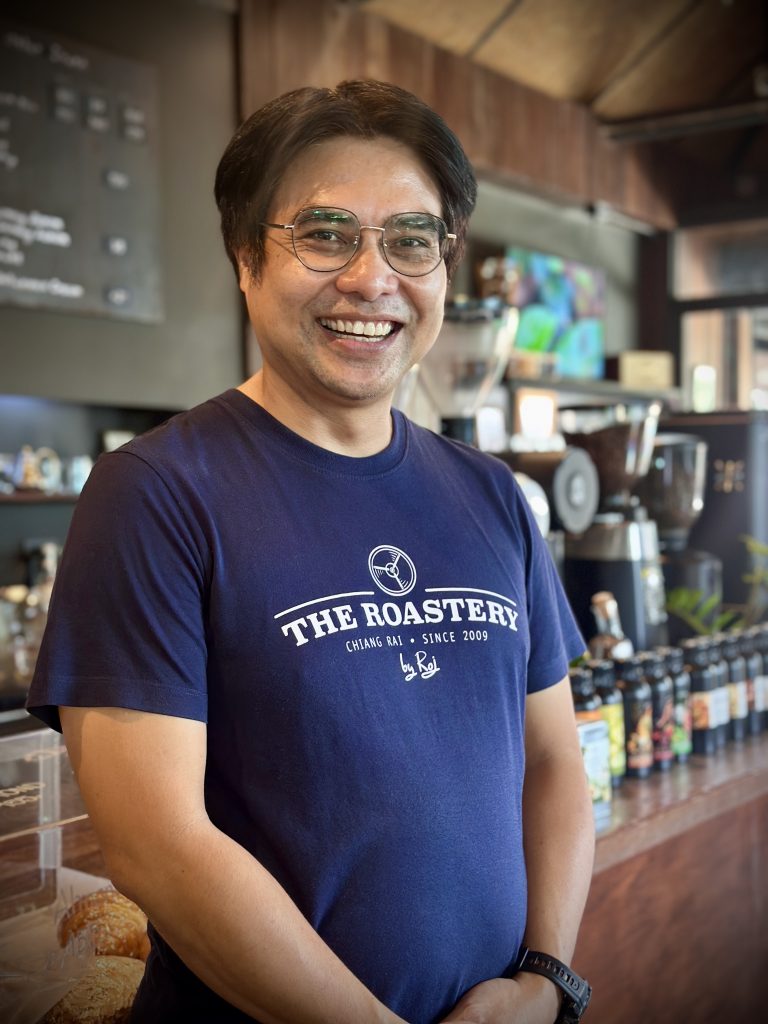
Understanding What Makes Coffee Special
Saroj begins by discussing changes in coffee culture, from instant coffee and the expansion of coffee-shop chains to greater interest in origin, lighter roasts and scientific approaches to production and brewing. His central point is that specialty coffee cannot be identified simply by a fashionable café or a particular roast colour. Quality begins with the coffee itself and depends on how it is grown, processed, assessed, roasted and prepared. He describes checking green beans and tasting brewed samples as complementary parts of that assessment. Appearance alone cannot reveal everything about a coffee’s flavour or condition. The Specialty Coffee Association’s current definition also takes a broad view. It recognises specialty coffee through distinctive attributes that create additional market value, including sensory qualities and information about origin, producers and production methods.
Three Cups and Different Preferences
During the presentation, visitors are served three coffees and asked to choose the one they enjoy most. Saroj returns to that question at the end, inviting a show of hands. The exercise makes the discussion accessible to people with different levels of coffee knowledge. Rather than asking visitors to remember technical terminology, it gives them an opportunity to compare what they taste. Saroj acknowledges that people can enjoy different roast styles. His discussion separates personal preference from the work required to produce quality coffee: choosing a darker or lighter roast does not, by itself, explain the quality of the beans. For travellers, this turns a coffee stop into a learning experience, with the tasting providing a starting point for understanding production and flavour.
Working with Local Farmers
The relationship with growers is central to Saroj’s account. He describes beginning with a small traditional coffee business before recognising the opportunities offered by specialty coffee. Improving quality, he explains, requires effort and investment at each stage. Farmers need knowledge and support, while processors, roasters and baristas must preserve and develop the qualities of the coffee they receive.
Saroj also describes help from visiting coffee professionals and connections that introduced growers to buyers. In his account, the café becomes a meeting point where knowledge, feedback and commercial relationships can develop. An earlier interview published by coffee professional Will Frith supports this emphasis. Saroj described helping farmers organise, improve their beans and connect with buyers, while seeking better livelihoods for producers and affordable quality coffee for the local community.
Opportunities for a Younger Generation
Saroj links the development of specialty coffee to opportunities for younger people in farming communities. He describes young growers returning home, working with their parents and developing their knowledge of coffee production. Competitions and quality assessments feature in his presentation as ways for farmers to gain recognition and attract buyers. He sees these activities as an incentive to improve, helping producers demonstrate the value of their work. His account places the farmer at the centre of the story. The finished drink depends on skills and decisions made long before the beans reach a roasting machine or café counter.
Coffee Growing and the Environment
Saroj also discusses the relationship between coffee cultivation, shade trees and agricultural burning. He argues that viable coffee farming can encourage growers to maintain trees and reduce reliance on crops associated with repeated land burning. He identifies heat as a challenge for coffee quality and explains the importance he places on shade within farms. These are presented as part of his approach to supporting both growers and the landscape on which their livelihoods depend. Pasted text(6)
Learning About Coffee in Chiang Rai
The Roastery By Roj offers formal learning opportunities alongside its café and roasting activities. Its published course programme includes cupping and sensory evaluation, aroma identification and professional roasting. The Roastery By Roj
For visitors interested in Chiang Rai’s coffee culture, Saroj’s presentation provides a connection between the drink, the producer and the place. It shows how a tasting can open a wider conversation about skills, farming and local livelihoods.
The Roastery By Roj
Sanambin Road, Tambon Rop Wiang, Chiang Rai 57000, Thailand
Coffee classes and further information The Roastery By Roj